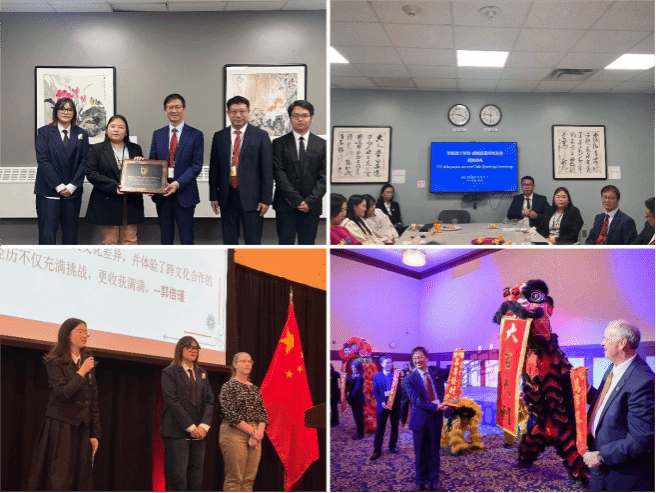
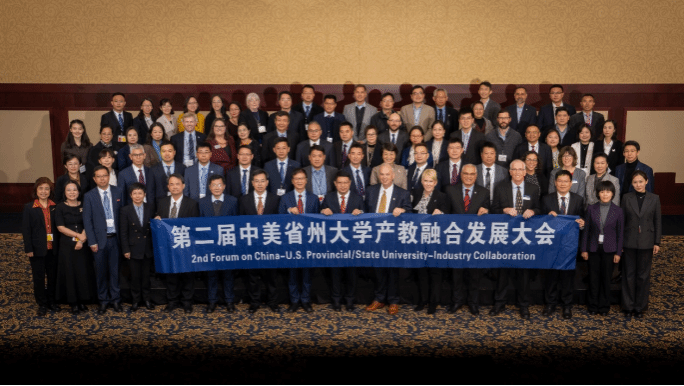
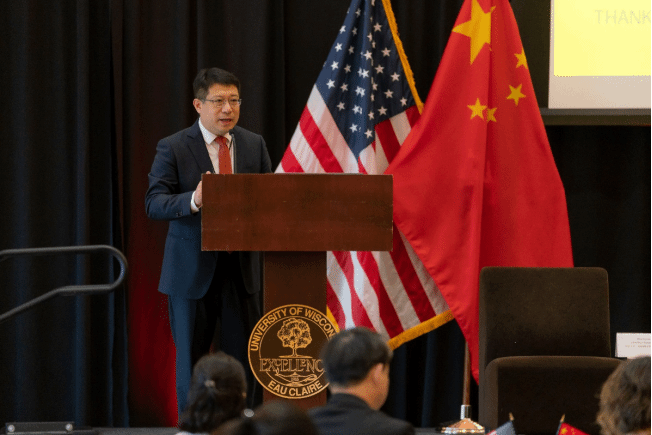
Approved by the Department of International Cooperation and Exchange of the Ministry of Education, organized by the China Education Association for International Exchange, co-hosted by our university and the China Education International Exchange Center, and hosted by the University of Wisconsin-Eau Claire, the China-U.S. Provincial and State University-Industry Collaboration Forum was held in the United States from November 12 to 14. Under the theme “Educational Innovation: Exploring New Pathways for Industry-Education Integration at Provincial and State Universities in China and the U.S.,” the conference was attended by more than 100 university leaders and education experts from 36 universities in both China and the United States. Jay Rothman, President of the University of Wisconsin System; Zhang Jing, Director of the China Education International Exchange Association; and Sophie Li, Deputy Director of Asian Affairs at the American Association of State Colleges and Universities, attended the conference and delivered opening remarks. Jiang Jianming, President of our university; James Schmidt, President of the University of Wisconsin-Eau Claire; and Shi Quan, Vice President of Nantong University, delivered keynote speeches at the conference.
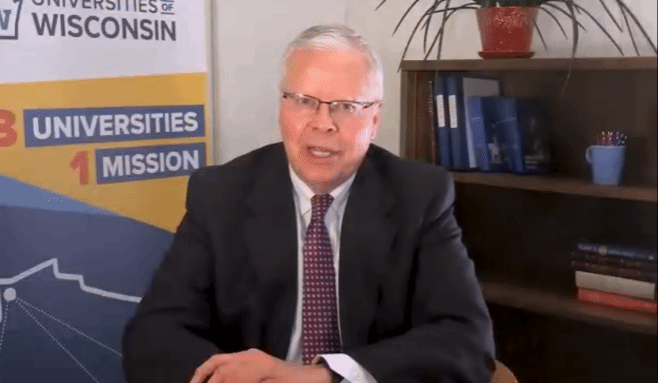
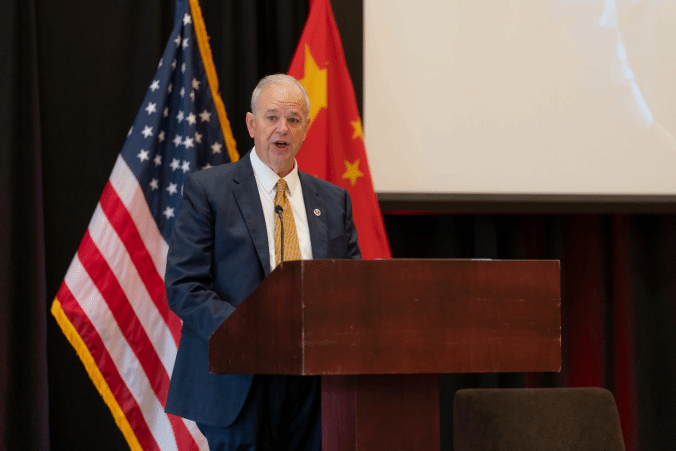
In his opening remarks, Jay Rothman welcomed the Chinese and American guests attending the conference. He noted that the 13 universities in the University of Wisconsin System, guided by the “Wisconsin Idea,” contribute to the development of human society through talent development and research. He emphasized that this conference represents an important practical application of industry-academia collaboration and provides opportunities for cooperation between U.S. and Chinese provinces and states. He expressed his hope that more universities from both countries would participate in such collaborations and achieve fruitful results.
Zhang Jing pointed out that universities in Chinese provinces universities and U.S. states universities share many similarities in areas such as integrating industry and education to serve local communities. Both sides should engage in pragmatic exchanges and candid communication to promote the development of people-to-people educational exchanges between China and the United States, and contribute to the local economic and social development of both countries through the integration of industry and education.
Li Sophie stated that the American Association of State Colleges and Universities will continue to serve as a platform for cooperation between universities in U.S. states and Chinese provinces, enabling more universities and businesses from both countries to participate in industry-academia partnerships.
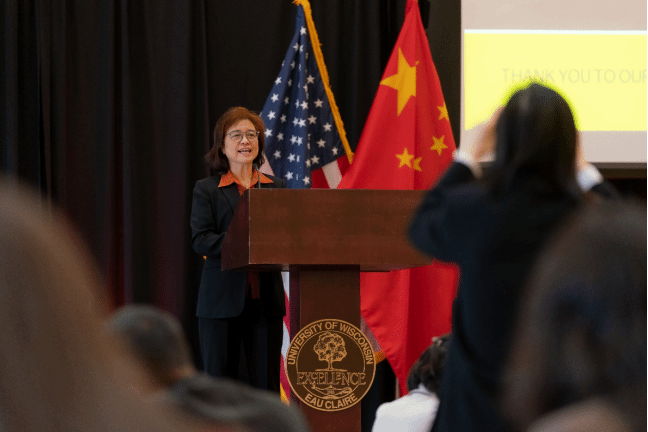
In his keynote speech titled “Achieving Sustainable Development in Talent Cultivation Through Industry-Education Integration at Provincial and State Universities in China and the U.S.,” Jiang Jianming reviewed the university’s cooperative foundation and achievements in innovating dialogue mechanisms between Chinese and U.S. universities, focusing on the cultivation of internationally-oriented innovative talent, establishing platforms for academic exchange between China and the U.S., developing distinctive features of industry-education integration, and promoting cultural exchanges between provinces and states in China and the U.S. He pointed out that universities in both China and the United States must join hands to address the transformations in higher education by reforming training models and restructuring students’ skill sets to adapt to new developments in industrial technology. Jiang Jianming proposed moving from the “Wisconsin Philosophy” to “Industry-Education Integration,” by establishing a collaborative talent development mechanism involving government, industry, academia, and research; reshaping the technical competency curriculum system; and promoting the substantive development of China-U.S. industry-academia colleges. This approach aims to propel China-U.S. higher education cooperation toward a new phase of industry-education integration and enhance universities’ capacity to serve the regional economy.
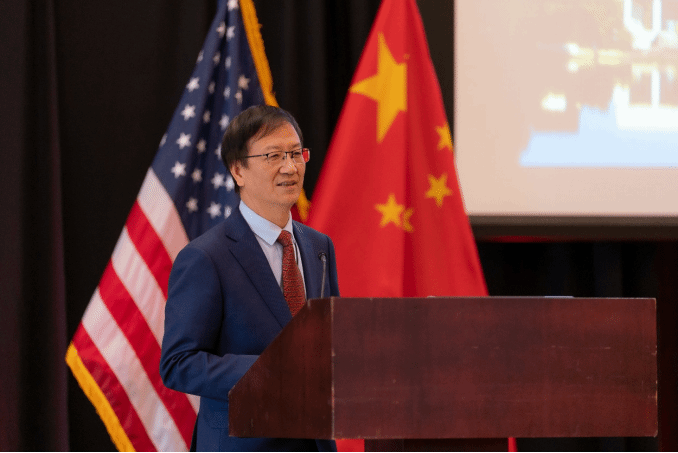
In his keynote address, Schmid shared the University of Wisconsin-Eau Claire’s triadic educational philosophy—combining teaching, research, and service—along with practical examples of its implementation. He emphasized that universities in China and the United States must be interdependent and pursue win-win cooperation. He noted that this development conference serves as an ideal platform for sharing innovative approaches to talent development between Chinese and American institutions of higher education, and that such exchanges can foster new partnerships. He called on universities in Chinese provinces and U.S. states to work together to play a role in regional economic development.
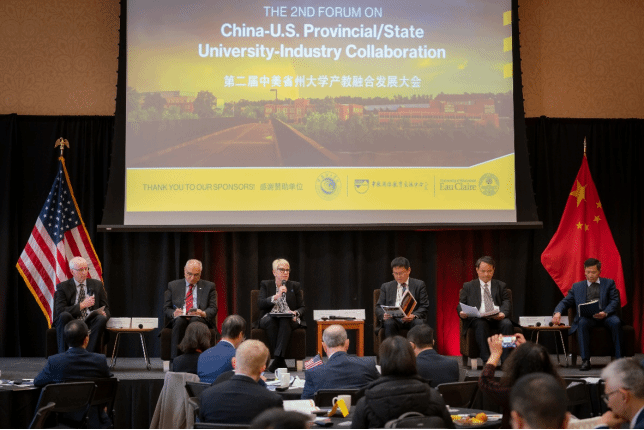
The conference’s thematic panel discussion was co-chaired by Yi Bing, President of Hunan University of Engineering, and Mike Carney, Vice President of the University of Wisconsin–Eau Claire. Panelists included Katherine Frank, President of the University of Wisconsin–Stout; Pu Lijie, Deputy Secretary of the Party Committee at Nanjing University of Engineering; Shahzad Ahmad, Vice President of St. Cloud State University; and Zhang Longhai, Vice President of Minnan Normal University. They discussed how university-industry collaboration can advance universities’ mission to serve local communities and innovate pathways for university development; how universities, industry, and the regional economy can develop in a coordinated manner to support universities in cultivating talent for the future development of the local economy; and how universities in Chinese provinces and U.S. states can partner with enterprises to jointly address the many challenges facing the world today, such as climate change, public health, and transnational crime.
At the closing ceremony, Jiang Jianming, on behalf of the 24 Chinese universities, expressed gratitude to the University of Wisconsin-Eau Claire and President Schmid’s team. He noted that since our university launched the first China-U.S. Provincial-State University Industry-Education Integration Development Conference in October 2023, it has consistently aimed to promote practical cooperation between Chinese and U.S. universities and to serve economic, trade, and cultural exchanges between provinces and states. The Second China-U.S. Provincial and State Universities Industry-Education Integration Development Conference was successfully held in Eau Claire. This marks the first time that the China-U.S. Talent Development Program’s “121 Project” platform has hosted a large-scale development conference in the United States. It will further deepen cooperation and exchange between Chinese and U.S. provincial and state universities, enabling more institutions from both countries to join hands in cultivating globally-minded talent for regional economic development.